
Jul 17

The Florida Coastal Lifestyle: Where Every Day Feels Like a Getaway (Even Tuesdays)

Close your eyes and picture it: bare feet on warm sand, salt in the air, a horizon that stretches on forever. Now open your eyes — because in Florida, that isn't a vacation fantasy. That's just Tuesday. Possibly a Tuesday where you also got a sunburn because you forgot, again, that the sun here does not mess around.


The Florida coastal lifestyle isn't a place — it's a whole personality shift. It's sunrise paddleboard sessions before your inbox is even awake, dockside dinners where the "catch of the day" was, at some point, actually swimming, and a general refusal to own a snow shovel ever again. So let's take a proper look at what makes coastal Florida living so irresistible — sunscreen not included.

The Endless Summer: Climate & Year-Round Outdoor Living

Florida is nicknamed the Sunshine State, and unlike most nicknames, this one is depressingly accurate for anyone who's ever tried to plan an outdoor wedding here in July. With over 230 sunny days a year and winters so mild that "cold front" mostly means people put on a light cardigan, Florida offers something most of the country can't: a calendar with basically no off-season.


While everyone else is digging their car out of a snowbank, coastal Floridians are debating whether it's a flip-flops day or a "barefoot is basically a shoe" day. Mornings happen along the shoreline instead of on a treadmill nobody enjoys. Dinner is served outside more often than in, weekends are planned around tide charts instead of weather apps, and pools stay open all year because, frankly, why wouldn't they. When your environment invites you outside 365 days a year, life just... expands to fill the space. Your houseplants have never been happier. Neither have you.

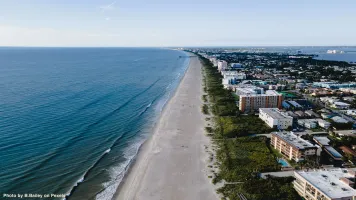
A stunning aerial view of Cocoa Beach with sandy beaches and urban waterfront buildings.A stunning aerial view of Cocoa Beach with sandy beaches and urban waterfront buildings.

Looking south along Cocoa Beach, Florida

Seamless Indoor-Outdoor Living (Or: Why Your Living Room Now Has a Breeze)

Florida's climate hasn't just changed how people spend their time — it's changed how homes are lived in, even if you're renting, visiting, or just very committed to a good Airbnb. The whole design philosophy along the coast boils down to one idea: the wall between "inside" and "outside" is more of a suggestion.


Sliding glass doors vanish into pockets so an entire room opens straight onto the breeze. Covered porches and lanais mean you can sit outside during a rainstorm and feel smug about it. Outdoor kitchens exist because nobody wants to leave the party to check on the grill, and pools blur into the horizon so convincingly that guests will ask, with complete sincerity, "wait, is that the ocean or the pool?" (It's the pool. It's always the pool. But we appreciate the confusion.)


The result is a life that spends a lot less time indoors and a lot more time somewhere in between — on a porch, by a pool, under a fan, with a drink that has too much fruit in it and exactly the right amount of rum.

Coastal Style, All Grown Up

Let's address the seashell in the room: coastal decor used to mean a rope-wrapped mirror, a wooden sign that said "Life's a Beach," and enough starfish to alarm an actual marine biologist. That era is, thankfully, over.


Modern coastal style has matured into something far more subtle — sandy neutrals, warm cream walls, and bleached wood tones that look like they were personally sun-kissed. Layer in natural textures like rattan, jute, and linen, add a pop of seafoam or navy here and there, and you get a home that feels calm and collected rather than "gift shop at low tide." It's coastal living for people who've outgrown their college dorm's "beach vibes" tapestry — sophisticated, breathable, and blessedly seashell-optional.

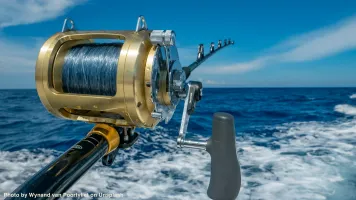
Sports fishing rod and reel in a boat's wake.Sports fishing rod and reel in a boat's wake.

Waiting for the hookup.

Water-Centric Recreation: Your New Personality

In coastal Florida, the water isn't scenery — it's basically your whole social calendar. Ask someone their weekend plans and there's a solid chance the answer involves a boat, a paddle, or at minimum, a very confident inner tube.


Deep-sea fishing charters head out at dawn chasing mahi-mahi and tarpon while everyone pretends they know what they're doing. Paddleboarders drift through mangrove tunnels at sunrise, mostly staying upright. Kayakers explore hidden estuaries, jet skis carve up open bays with the subtlety of a fireworks show, and somewhere, right now, someone is trying to convince their in-laws that stand-up paddleboarding is "easier than it looks." It is not.


The best part? None of this requires a special occasion. A quick paddle before work. A sunset boat ride that was "just going to be twenty minutes." An afternoon spent floating and doing absolutely nothing productive whatsoever — which, out here, counts as a well-spent day.

Health, Wellness & The "Blue Mind" Effect (Science Says Chill Out, Literally)

There's actual science behind why staring at water makes you feel weirdly zen. Marine biologist Wallace J. Nichols coined the term "Blue Mind" to describe the mildly meditative state our brains slip into near, in, on, or under water — lower stress, better mood, that specific kind of calm you get watching waves that you cannot replicate by watching your phone, no matter how hard you try.


Add to that a steady dose of vitamin D, salt air that somehow makes everyone's hair look better than it has any right to, and a lifestyle where "exercise" often just means "walked to get ice cream, but along the beach." Coastal living doesn't force wellness on you through a gym membership you'll cancel in March — it just makes the healthy option the fun, obvious, barefoot one.

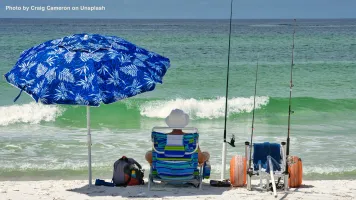
A man relaxing, fishing at the beach.A man relaxing, fishing at the beach.

Sunday fishing on the beach.

Fresh Coastal Dining: Sea-to-Table, Minus the Pretension

Florida's coastline doesn't just border the ocean — it basically caters from it. The sea-to-table food scene here means "fresh catch" isn't a marketing phrase, it's a guy named Dave who brought it in that morning.


Dock-and-dine culture lets you tie your boat up and walk straight to your table, which is either the most efficient dinner reservation system ever invented or an elaborate excuse to buy a boat — we don't judge either way. Menus lean on buttery Gulf grouper, delicate snapper, and stone crab claws so good you'll fight a stranger for the mustard sauce. Tiki bars serve rum drinks with more garnish than actual rum, and somewhere along the coast, right now, a bartender is asking if you want extra pineapple, and the answer is always yes.

Not All Coasts Are Created Equal (Choose Your Fighter)

Here's what people don't realize: "Florida coastal" isn't one lifestyle — it's several very different personalities wearing the same sunscreen.


The Gulf Coast — Naples, Sarasota, the famous stretch of 30A — is calm, quiet, sugar-white sand so fine it practically squeaks in protest when you walk on it. This is laid-back luxury: think sunset happy hours and a pace of life best described as "unhurried on purpose."


The Atlantic Coast — Palm Beach, Fort Lauderdale, Miami — is a different animal entirely. Bigger waves, bigger yachts, bigger energy. This is where nightlife doesn't just exist, it has an agenda. If the Gulf Coast is a nap in a hammock, the Atlantic Coast is a nap in a hammock that somehow also involves a DJ.


The Florida Keys round things out with pure island time — turquoise flats, coral reefs, and a culture where nobody's ever really in a rush, mostly because rushing in 95-degree humidity is a rookie mistake. Life moves at the speed of the tide, and honestly, the tide's not stressed either.


Pick your coast based on your personality, or better yet — visit all three and let them fight it out.

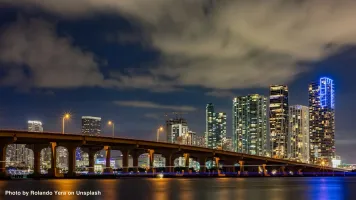
Downtown Miami with Macarthur Causeway in the foreground. The angle is looking from Venetian Causeway.Downtown Miami with Macarthur Causeway in the foreground. The angle is looking from Venetian Causeway.

Downtown Miami with Macarthur Causeway in the foreground.

Community, Golf Carts & Sunset Peer Pressure

Coastal Florida living isn't just about the beach — it's about the slightly chaotic, deeply charming community built around it. Many coastal towns run almost entirely on golf carts, which somehow makes even a grocery run feel like a parade.


Weekly farmer's markets fill town squares with produce, flowers, and someone playing acoustic guitar a little too enthusiastically. Sunset gatherings on the beach have become an unofficial nightly tradition — total strangers pausing together to watch the sky do its thing, then clapping when the sun finally dips below the horizon, as though the sun had a choice in the matter. It's a low bar for a standing ovation, but somehow it never gets old.


Beach clubs, pickleball courts, and neighborhood happy hours round it out. It's community built less around obligation and more around "hey, want to come watch the sunset with us" — which, it turns out, is a pretty solid foundation for making friends as an adult.

A Slower, Saltier Way to Measure a Good Day

Coastal living quietly resets what counts as a "good day." It stops being about how much you got done and starts being about how much you actually enjoyed. A good day might be: caught a fish, or didn't, but saw a dolphin. Got sand in the car. Watched a storm roll in from the porch instead of running from it. Ate dinner outside because why would you eat inside.


There's a rhythm to it — slower mornings, longer evenings, an entire subculture of people who genuinely cannot tell you what day of the week it is because the tide doesn't care and neither, eventually, do you. It's not laziness. It's recalibration. Turns out when your environment is this good, ambition quietly takes a back seat to a well-earned sunset.

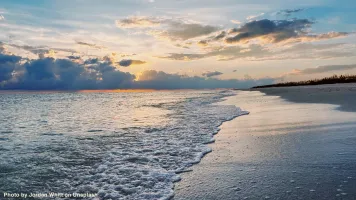
Tigertail Beach, Hernando Drive, Marco Island, FL, USATigertail Beach, Hernando Drive, Marco Island, FL, USA

Tigertail Beach, Marco Island, FL, USA

So... Now What?

You don't need a five-year plan to start living more like this — you need a beach chair, a decent hat, and the willingness to occasionally smell like sunscreen. Start small: take the scenic coastal route instead of the highway. Eat dinner outside tonight, even if "outside" is just your apartment balcony. Learn to identify one (1) local fish so you can nod knowingly at the seafood counter.


The Florida coastal lifestyle isn't reserved for people with a boat slip and a waterfront view — it's a mindset you can borrow immediately, wherever you are on the map. Slow down a little. Watch a sunset on purpose instead of by accident. Let a good breeze talk you out of your to-do list for one evening.


Because at the end of the day, the whole appeal of coastal living isn't the address — it's the attitude. And that part, refreshingly, is free.

More Coastal Reads

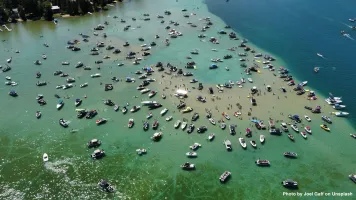
<p>Anchors Down, Coolers Up: Inside the Wild, Waterlogged World of Sandbar Parties</p><p>Anchors Down, Coolers Up: Inside the Wild, Waterlogged World of Sandbar Parties</p>

Anchors Down, Coolers Up: Inside the Wild, Waterlogged World of Sandbar Parties

There is a very specific sound that kicks off a great American weekend, and it is not a starting gun or a church bell. It is the low, satisfied rumble of a twin-engine center console idling out of a marina at 9:47 a.m., already three minutes behind schedule because somebody forgot the ice. Somewhere on board, a dry bag holds a bad speaker that's about to be asked to do the job of a great speaker. The cooler is packed like a Tetris champion did it. And out on the horizon, invisible but very much real, a shelf of sand is waiting just beneath the surface of the Gulf, the Atlantic, or the Bahama Banks — waiting to become, for one glorious afternoon, the most popular zip code in the state.


Welcome to sandbar season. Population: several hundred boats, a floating inflatable flamingo the size of a Buick, and at least one guy named Chad who brought a whole rotisserie chicken.
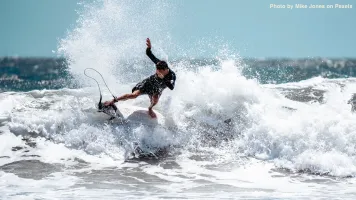
<p>Small Waves, World Champions: The Improbable Kingdom of Florida Surfing</p><p>Small Waves, World Champions: The Improbable Kingdom of Florida Surfing</p>

Small Waves, World Champions: The Improbable Kingdom of Florida Surfing

Ask a surfer in Oahu or Santa Cruz what they think of Florida surf, and you'll likely get a polite smirk. No towering reef breaks. No thundering big-wave arenas. Just warm, shallow water rolling over sandbars, producing waves that rarely crack head-high. And yet, spin the globe of competitive surfing and Florida's fingerprints are everywhere — on world titles, on Olympic podiums, on the sport's entire evolution toward aerial, high-performance surfing.


This is the Florida Paradox: a state with some of the least intimidating waves in the world has produced some of its most dominant surfers. Kelly Slater, an 11-time World Champion, grew up carving the mushy peaks of Cocoa Beach. Caroline Marks, an Olympic gold medalist, cut her teeth in the same Space Coast waters. Lisa Andersen and C.J. Hobgood built legendary careers on Florida's unglamorous beach breaks. None of them learned on Pipeline. They learned on knee-high slop — and that, it turns out, is exactly the point.


Florida surfing isn't a lesser version of the sport practiced elsewhere. It's a different discipline entirely, one built on precision, adaptability, and relentless repetition. To understand how a flat, sandy peninsula became a factory for world champions, you have to understand the swells that shape it, the coastline that channels them, and the culture that turned limitation into innovation.