
Anchors Down, Coolers Up: Inside the Wild, Waterlogged World of Sandbar Parties

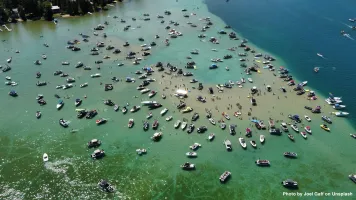
There is a very specific sound that kicks off a great American weekend, and it is not a starting gun or a church bell. It is the low, satisfied rumble of a twin-engine center console idling out of a marina at 9:47 a.m., already three minutes behind schedule because somebody forgot the ice. Somewhere on board, a dry bag holds a bad speaker that's about to be asked to do the job of a great speaker. The cooler is packed like a Tetris champion did it. And out on the horizon, invisible but very much real, a shelf of sand is waiting just beneath the surface of the Gulf, the Atlantic, or the Bahama Banks — waiting to become, for one glorious afternoon, the most popular zip code in the state.


Welcome to sandbar season. Population: several hundred boats, a floating inflatable flamingo the size of a Buick, and at least one guy named Chad who brought a whole rotisserie chicken.

The Physics of a Really Good Time

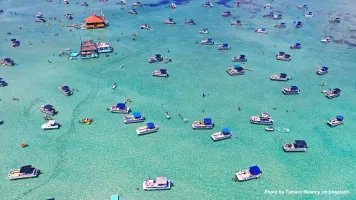
Let's get the boring part out of the way, because it's actually the reason any of this works. A sandbar is exactly what it sounds like — a shallow shoal of sand sitting just under the waterline, often just far enough offshore that you need a boat to reach it, but shallow enough that once you're there, you can stand chest-deep (or ankle-deep, if the tide's being stingy) in water so clear it looks Photoshopped. That's the entire secret. No dock, no bar stools, no cover charge. Just water shallow enough to stand in and deep enough to float a hundred boats side by side, engines off, anchors down, tied hull to hull until the whole thing looks like a pontoon-based Burning Man.


Florida and the Bahamas didn't invent shallow water, obviously. What they invented — or more accurately, what boaters, bartenders, and a healthy disregard for Monday mornings invented over the last few decades — is the ritual around it. The sandbar isn't a destination. It's a stage. And every weekend from roughly March through October, thousands of people build the same set from scratch: boats as furniture, coolers as currency, and a floating inflatable something as the evening's main character.

Crab Island, Fort Walton Beach, FL 32548

Crab Island: The Undisputed Capital

If sandbar culture had a Vatican, it would be Crab Island, tucked just off Destin, Florida, behind the East Pass bridge. On a good Saturday in July, Crab Island doesn't look like a sandbar so much as a small, chaotic, extremely buoyant nation-state. Hundreds of boats raft together. Floating food trucks — actual boats rigged to sell tacos and daiquiris — motor between the rafts like ice cream trucks patrolling a cul-de-sac. There are floating trampolines. There is, somehow, always a guy on a jet ski going faster than seems either legal or wise.


Crab Island isn't even technically an island — it's submerged most of the time, a sandy plateau in the Choctawhatchee Bay that tourism folklore has puffed up into legend. But that's sort of the point. The name promises more than the geography delivers, and the culture delivers exactly what the name promised anyway. It's the sandbar version of a Vegas casino: the details don't matter once you're inside the vibe.


Head south along the Gulf Coast and you'll find its cousins — Ski Beach off Fort Myers Beach, the sandbars off Anna Maria Island, the Redington Long Bar near St. Pete. Cross to the Atlantic side and Miami's Haulover Sandbar becomes the scene, a strip of shallow water near Haulover Inlet that turns into a floating block party every warm-weather weekend, complete with a soundtrack that changes boat to boat like flipping through radio stations, except every station is playing something you can dance to.


Then there's Peanut Island near Palm Beach, which somehow manages to be both a genuine nature preserve — turtles, mangroves, a Cold War-era bunker President Kennedy used to duck into — and, on Sundays, a place where a Bluetooth speaker war breaks out between three different pontoon boats simultaneously. Nature and nonsense, sharing a shoreline.

Then the Water Turns Turquoise: The Bahamas Sandbar Scene

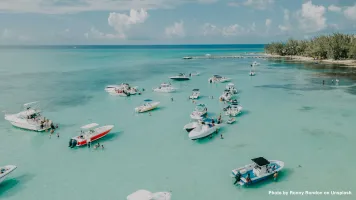
Hop over the Gulf Stream — about fifty miles of open water separating Florida from a country that seems to have been designed by someone with an unlimited budget for blue — and sandbar culture gets a passport stamp and a serious upgrade in scenery.


The Exuma Cays are the marquee attraction, mostly because of a very specific and very famous sandbar resident: the swimming pigs of Big Major Cay. Yes, actual pigs, that actual swim, out to actual boats, for actual snacks. It sounds like a rumor concocted by a bored travel blogger, but it is completely real, and it has turned a shallow stretch of sand into one of the most photographed non-human tourist attractions in the Western Hemisphere. Nearby, Thunderball Grotto — yes, the one from the James Bond movie — draws snorkelers into a limestone cave lit by shafts of sunlight, before everyone paddles back out to raft up on the sandbar and do what sandbar culture does best: nothing, beautifully.


Closer to Nassau, Rose Island and the sandbars off Athol Island serve the same function that Haulover does for Miami — an easy day-trip playground where charter boats, private catamarans, and the occasional superyacht tender all drop anchor together. The Bahamian version tends to skew a touch more polished — more rum punch than domestic light beer, more "we chartered a catamaran with a crew" than "we split a slip fee four ways" — but the underlying anatomy is identical. Shallow water. Rafted boats. A slow, collective exhale.

Sandbar gathering in the islands.

The Calendar Nobody Printed But Everybody Follows

Ask any regular when the real sandbar season kicks off and you'll get an answer with the confidence of a religious holiday, even though none of these dates exist on any official calendar. Memorial Day weekend is the opening bell — the unofficial christening of summer, when Crab Island and Haulover both go from "busy" to "are there this many boats in the entire state." The Fourth of July is the Super Bowl. Fleets raft up early, claim their turf, and wait for sunset, when hundreds of boats become the best seats in the house for firework shows launched from shore — a spectacle made stranger and more wonderful by the fact that the audience is bobbing gently in three feet of water the whole time.


Labor Day plays closer, more locals-heavy, tinged with the specific melancholy of a season winding down. And scattered through the calendar are the smaller, weirder rituals — the Sunday after a big fishing tournament, when boats detour to the sandbar to celebrate or drown their sorrows; the full-moon gatherings that spring up with zero advertising and total attendance, because someone posted about it in a boating Facebook group and word did the rest.


In the Bahamas, the rhythm bends around the charter calendar and cruising season rather than American holidays — winter and spring bring the snowbirds and the mega-yacht traffic, while summer belongs more to locals and regional boaters escaping the heat the same way everyone escapes heat everywhere: by finding water shallow enough to stand in and cold enough to matter.

Shallow water. Rafted boats. A slow, collective exhale.

Why Standing in Waist-Deep Water Became the Whole Point

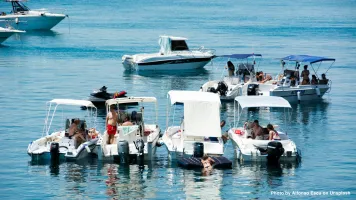
Here's the part that's easy to miss if you've never actually done it: the appeal of a sandbar isn't really about the water, or the boat, or even the party. It's about the posture. You're not lounging on a beach towel, jockeying for shade, brushing sand off everything you own. You're not squeezed into a bar stool with your knees against a stranger's. You're just standing there — drink in hand, water at your waist, boat at your back — talking to whoever happens to be floating next to you, because the whole social architecture of the place erases the normal walls. Nobody's the host. Nobody paid a cover. Everybody just showed up.


There's also something almost defiantly analog about it in 2026. You can't sandbar from your couch. You can't sandbar without at least one person in your group knowing which way the tide is running, or what happens to a boat's alignment when forty other captains all decide to anchor at once (chaos, mostly, with occasional light collisions and a lot of apologetic waving). It requires actual coordination, actual weather-watching, actual planning — and then it rewards all that effort with an afternoon where the plan is simply to stop planning anything at all.


And it's egalitarian in a way that surprises people. Sure, there are center consoles that cost more than a house, gleaming next to a twenty-year-old pontoon somebody's uncle rebuilt from a barn find. But once the anchors are down and the coolers are open, a sandbar doesn't really care what your boat is worth. Everyone's standing in the same three feet of water. Everyone's squinting at the same sun. The guy with the rotisserie chicken is, without question, the most popular person on the water regardless of what he arrived in.

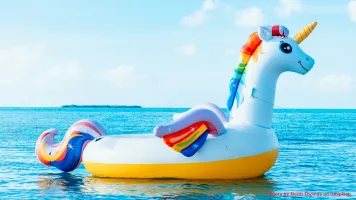
Rainbow unicorn inflatable inner tube in tropical island ocean water.

The Hangover, Literal and Cultural

It would be dishonest to write about sandbar culture without admitting the less Instagram-friendly parts. Sunburn is basically mandatory; nobody reapplies sunscreen with the diligence they promised themselves at 9 a.m. Boat traffic gets genuinely dangerous when a shallow area gets overcrowded, and both Florida and the Bahamas have wrestled publicly with how to regulate the crowds, the noise, and the trash that a few hundred rafted boats can generate in a single afternoon. Local governments around Crab Island and Haulover have floated (sorry) new rules over the years — anchoring limits, no-wake zones, cleanup requirements — the awkward, necessary paperwork that follows any party that got a little too big for its sandbar.


But even the regulations are, in their own way, proof of how deeply this culture has rooted itself. You don't write ordinances about things nobody cares about. The fact that towns are drafting sandbar policy is really just confirmation that this shallow, sandy, gloriously pointless tradition has become load-bearing infrastructure for the regional identity — as central to a Florida or Bahamian summer as a Friday fish fry or a Sunday church service, just with more sunscreen and considerably worse decision-making about how many drinks constitute "a few."

Anchors Up

By the time the sun starts dropping toward the mangroves, the fleet begins its slow, staggered unraveling — lines untied, engines coughing back to life one by one, someone's speaker still going strong even as their boat pulls away, the bassline trailing off across the water like the last verse of a song nobody wanted to end. Sunburned shoulders, salt-crusted hair, a cooler that's mysteriously both empty and somehow still dripping. Everyone motors home a little slower than they came out, not because anyone's tired, exactly, but because nobody's quite ready to admit the day is over.


That's the real magic trick sandbar culture has pulled off, from the Redneck Riviera to the Exuma Cays: turning a strip of submerged sand into a genuine cultural institution, one where the address changes but the invitation never does. Sun's out. Water's clear. Somebody already brought the chicken.


See you out there.

Photo sources: Unsplash and Pexels

Special shoutouts to: Joel Gaff, Tamara Malaniy, Ronny Rondon, Alfonso Escu and Meritt Thomas

More Posts

<p>Small Waves, World Champions: The Improbable Kingdom of Florida Surfing</p><p>Small Waves, World Champions: The Improbable Kingdom of Florida Surfing</p>

Small Waves, World Champions: The Improbable Kingdom of Florida Surfing

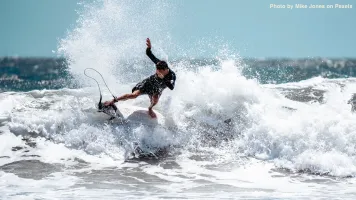
Ask a surfer in Oahu or Santa Cruz what they think of Florida surf, and you'll likely get a polite smirk. No towering reef breaks. No thundering big-wave arenas. Just warm, shallow water rolling over sandbars, producing waves that rarely crack head-high. And yet, spin the globe of competitive surfing and Florida's fingerprints are everywhere — on world titles, on Olympic podiums, on the sport's entire evolution toward aerial, high-performance surfing.


This is the Florida Paradox: a state with some of the least intimidating waves in the world has produced some of its most dominant surfers. Kelly Slater, an 11-time World Champion, grew up carving the mushy peaks of Cocoa Beach. Caroline Marks, an Olympic gold medalist, cut her teeth in the same Space Coast waters. Lisa Andersen and C.J. Hobgood built legendary careers on Florida's unglamorous beach breaks. None of them learned on Pipeline. They learned on knee-high slop — and that, it turns out, is exactly the point.


Florida surfing isn't a lesser version of the sport practiced elsewhere. It's a different discipline entirely, one built on precision, adaptability, and relentless repetition. To understand how a flat, sandy peninsula became a factory for world champions, you have to understand the swells that shape it, the coastline that channels them, and the culture that turned limitation into innovation.
<p>The Florida Coastal Lifestyle: Where Every Day Feels Like a Getaway (Even Tuesdays)</p><p>The Florida Coastal Lifestyle: Where Every Day Feels Like a Getaway (Even Tuesdays)</p>

The Florida Coastal Lifestyle: Where Every Day Feels Like a Getaway (Even Tuesdays)

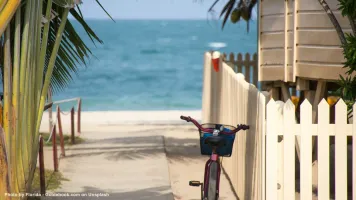
Close your eyes and picture it: bare feet on warm sand, salt in the air, a horizon that stretches on forever. Now open your eyes — because in Florida, that isn't a vacation fantasy. That's just Tuesday. Possibly a Tuesday where you also got a sunburn because you forgot, again, that the sun here does not mess around.


The Florida coastal lifestyle isn't a place — it's a whole personality shift. It's sunrise paddleboard sessions before your inbox is even awake, dockside dinners where the "catch of the day" was, at some point, actually swimming, and a general refusal to own a snow shovel ever again. So let's take a proper look at what makes coastal Florida living so irresistible — sunscreen not included.